HO 6235–COVERAGE FOR RESIDENT OF ASSISTED LIVING FACILITY
(May 2024)
Under a typical HO policy, qualifying insureds are
restricted to persons who live in the described home. Specifically, insureds
include the home’s listed owner and, if applicable, the owner’s spouse (if not
already shown as a named/listed insured), and legal, minor relatives (birth
children, adopted children, foster children, legal wards, etc.). An exception
also exists for persons who, for extended periods, live away from the residence
(such as college and/or boarding school students).
Related Article: AAIS Special Form Homeowners Analysis
The question of insured status becomes more complicated as
the party in question turns older. Adults may qualify as insureds if they are
also primary residents of the covered premises. However, this residency
requirement leaves a coverage gap for an increasingly common homeowner
situation: older or incapacitated relatives who reside in a nursing home or
assisted living facility.
Normally, adults who live in a different location that does
not qualify as a covered location (such as a second or seasonal home, rental
property, etc.) forfeit the privilege of being treated as an insured. However,
many homeowners are responsible for aged or infirm relatives who, due to their
intensive need for assistance with the routines of daily living, reside in
nursing homes and similar facilities.
AAIS offers an option for providing such persons with
property and liability protection. Coverage can be secured by attaching the HO
6235–Coverage for Resident of Assisted Living Facility endorsement. The form
provides coverage by amending a base HO policy’s Agreement, Property Coverages,
Liability Coverages, How Much We Pay for Loss or Occurrence provisions.
Related Court Case: “Insurer Obligated To
Defend Attack”
The form’s schedule is used to list the parties who are
residents of an assisted living facility and who are to be treated as insureds.
Besides providing their names, the name and location of the facility, limits
for Coverages C and L must be provided.
Note: Different limits
may be selected for each person listed.
Agreement–under
this section, the form requires an indication that the person shown in the
endorsement schedule meets all the following conditions:
·
Is living at a facility listed in the
schedule
·
Does not live at the primary residence
·
Is related to an insured through blood,
marriage, or adoption.
The facility listed on the endorsement must provide assistance with the requirements for daily living which
may include, but are not limited to, therapy, medical treatment, social activities,
and dining. The named insured must be responsible for the party(ies) receiving assistance.
This part of the form also obligates the HO insured to act on behalf of the
listed parties.
Property Coverages
Under this section
the form modifies the base policy by deleting references to building and
related structures coverages. It extends Coverage C to property of the resident
named in the form. The form adds a set of property sublimits (ranging from $100
to $500) for vulnerable items such as contact lenses, dentures, ambulatory aids
(such as walkers), hearing aids, eyeglasses, medical alert devices and
wheelchairs.
The coverage is designed for on-premises exposures, so the
form excludes coverage for property that is usually at a different location,
belongs to an insured, and property that belongs to the listed facility when
that property is being used (including when rented) by the resident insured.
Loss payment for a single occurrence is subject to the Coverage C limit on the
schedule.
|
Example:
Harold’s father’s ability to fend for himself has fallen off to the point
where he needs assistance. Harold helps sell his father’s home and arranges
for him to move to “Mellowtowne,” a nursing and retirement facility. Harold’s
father has his own room. Since most of the room is furnished with items that
Harold inherited from his parents, he adds an HO 6235 form onto his policy.
He uses a limit that should handle any loss of the furniture and other
property. |
|
The form also provides a modest limit ($500 per month for up
to a maximum of 12 months) to cover a resident insured’s additional living
expenses when an insured peril makes the portion of the facility used by that
insured unavailable. There is even coverage if the civil authorities prohibit
use of the facility due to neighboring conditions. The civil authority coverage
is $50 per day and limited to two weeks.
Liability Coverages
Under this section,
the form provides protection for the resident’s responsibility for causing
injury or loss to other parties. Only Coverage L – Personal Liability is
provided. Coverage M- Medical Payment for Others is specifically deleted.
|
|
Example:
Jim Slacker has a special form HO policy. He has endorsed the HO 6235 form
onto his policy in order to cover his mother, Gerty, who lives at Ornery
Homestead Manor, an assisted living facility. One day Jim is asked to come to
Ornery to see the owner. The owner explains to Jim that Gerty is being sued
because, while using her walker, she accidentally rolled over the foot of
another resident, fracturing that party’s instep. Jim’s modified policy will
respond to the claim. |
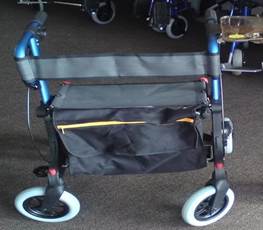
In the above example, without the endorsement, Gerty would
have no liability coverage, so the loss would have become an out-of-pocket
expense for her and Jim.
The liability section also adds its own, additional
exclusions. The form will not respond to losses involving liability that is assumed
by the described facility.
|
Example:
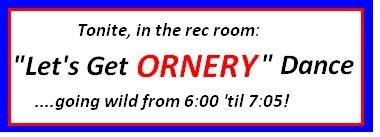
Ornery Manor occasionally provides special entertainment for its residents.
Every month they have different bands come for dances/concerts. Ornery uses a
band contract that includes a provision that they will handle any loss to
instruments that may occur while the band is loading in, performing, and
loading out and that each person attending a dance or contest is also bound
to this agreement. Such an agreement would not be eligible for coverage under
the endorsement if it did not involve a covered person being directly liable
for damage. |
|
Further, the form bars bodily injuries suffered by the named
facility’s staff while they are caring for the listed insured.
|
Example:
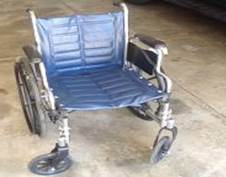
Arkady, an Ornery Manor staffer, is escorting Gerty, by wheelchair, from her
room to the Manor’s community room. Gerty belongs to the Manor chorus and
Arkady is taking her to practice. On the way, one of the front wheels on the
wheelchair hits an object; the chair stops abruptly and nearly tips over.
Arkady is able to control it without harming Gerty, but one of the metal
edges on the chair slashes Arkady’s wrist and arm. The expenses to treat
Arkady’s injury would not be covered by the endorsement. |
How Much We Pay for Loss or Occurrence
Under this section, the base HO policy’s property deductible
is extended to apply to the property protection provided by the form.
|
|
Example:
Carly’s home is amended with the HO 6235–Coverage For Resident Of Assisted
Living Facility form. Both her home and the nursing home she is staying in
are in the path of a tornado which destroys property she owns in both
locations. The deductible on her HO policy is only applied once to her total
property loss. |
The limit of Insurance for Coverage L is not based on the
number of insureds but instead is based on number of persons insured since the
persons being protected under this endorsement are never referred to as
insureds. No matter how many persons are covered, how many parties receive
injury, number of claims brought or the number of policies periods involved,
the limit for Coverage L in the schedule of this endorsement is the most
available for a single occurrence.
Insurance
Under More Than One Policy
If another source of coverage is available to respond to a
loss, then the form’s protection applies on an excess basis.